Senior Fellows
Senior Fellows are called on for assistance with particular research, knowledge communities, funding opportunities, and contextualizing IHOPE in the larger global research network.
Robert Costanza is a Chair in Public Policy at Crawford School of Public Policy. Prior to this, he was Distinguished University Professor of Sustainability, in the Institute for Sustainable Solutions at Portland State University. Before moving to PSU in Sept. 2010, he was the Gund Professor of Ecological Economics and founding director of the Gund Institute for Ecological Economics at the University of Vermont. Before Vermont, he was on the faculty at Maryland and LSU, a visiting scientist at the Beijer Institute in Sweden, and at the Illinois Natural History Survey. Dr. Costanza is also currently a Senior Fellow at the National Council on Science and the Environment, Washington, DC, and a Senior Fellow at the Stockholm Resilience Center, Stockholm, Sweden, and an Affiliate Fellow at the Gund Institute for Ecological Economics at the University of Vermont.
John Dearing is currently Professor of Physical Geography with over thirty years of experience of using lake sediments and other historical records to reconstruct environmental change. Through his PhD and post-doc studies, he helped pioneer the use of magnetic analyses of sediments as a tool in erosion and pollution studies. Dearings recent work has highlighted the role of multi-decadal timescales in addressing the complexity concepts that populate national and international research agendas, particularly with regards social-ecological systems and resilience theory (Dearing 2008, Dearing et al. 2010, Dearing et al. 2012a). Since 2000, he has been PI and co-I on grants worth >£5M from UK NERC, ESRC, Belmont Forum, Leverhulme Trust and Royal Society, resulting in over 50 peer-reviewed journal articles and chapters. Dearing has been involved as PI or co-I on four UK Ecosystem Services and Poverty Alleviation (ESPA) Programme grants addressing: ecosystem service dynamics in China (PI ESPA Yangtze PFG 2011) and Bangladesh (co-I ESPA Deltas 2012); methods to assess safe operating spaces for human activities at regional scales (PI ESPA EIRG 2012); and communicating complexity to stakeholders (PI ESPA RIU 2012). I have also played an active role in the activities of the International Geosphere-Biopshere Programme (IGBP). Read more here.

Jeremy Farr is an interdisciplinary researcher focused on the study of past and present food systems, political ecology, and multispecies entanglements. He has a background in archaeology (archaeobotany), environmental sustainability, and social science. He recently completed his PhD: The archaeobotany of food systems in southern-central Africa in the first and second millennium CE and its implications for food security in the region today. His archaeobotanical investigations of sites across Zambia have established a diachronic record of the mixed use of cereals (sorghum, pearl millet, and finger millet) and wild foods over a period of 600 years. This research was linked to the modern history of Zambia, which has experienced a century of food insecurity initiated by interventions into the Indigenous food system by the British Empire.
While continuing his work on Zambian archaeobotany, Jeremy is currently a research fellow working on food systems transformations in Australia. This work uses systems thinking to explore the dynamics between environment, technology, culture, and governance to understand how the emergent properties of these connections shape food system outcomes including health, biodiversity, food security, and social equity.

John Finnigan is the director at the Complex Systems Science Centre at the Commonwealth Scientific and Industrial Research Organisation (CSIRO), an independent Australian federal government agency. Since the 1990s he has a long experience of leading research on Complex Systems. His current activities include both global integrated assessment modelling of energy and climate mitigation and extending the Planetary Boundaries concept to the intersection of the biophysical and Social domains. This involves construction of complex systems models of the pre-industrial human-earth system with the industrial and post-industrial times. John is a Visiting Professor at the School of Geophysical Sciences, University of Edinburgh, Scotland, an Affiliate Scientist at the National Center for Atmospheric Research (NCAR), Boulder Colorado, USA, a Fellow of the American Geophysical Union and a Fellow of the Australian Academy of Science.

Enrique Leff is a Mexican environmental sociologist, environmental philosopher and environmentalist, Emeritus Researcher at the National Autonomous University of Mexico, UNAM and at the National Council for Science, Technology and Humanities in Mexico. Regarded as one of the key environmental thinkers in Latin America and worldwide, he has published extensively in the fields of political ecology, environmental sociology, ecological economics, environmental epistemology and environmental education. Enrique Leff is best known for arguing that environmental problems result from a crisis of Western civilization’s ways of knowing, understanding and transforming the world that he argues, is responsible for the ecological degradation of the planet by masking the conditions for the sustainability of life and other legitimate ways of thinking and acting in the world grounded on the principles of an environmental rationality: an ontology of diversity, a politics of difference and an ethics of otherness.
 Carl Folke, professor in natural resource management, is founder and science director of the Stockholm Resilience Centre, Stockholm University and director of the Beijer Institute of Ecological Economics, the Royal Swedish Academy of Sciences, Sweden. He works on social-ecological systems and resilience emphasizing the need to reconnect to the capacity of the biosphere to sustain development. He co-founded the Resilience Alliance, has been engaged in the development of ecological economics, leads the Global Economic Dynamics and the Biosphere Academy Programme and directs the IPO of the Programme of Ecosystem Change and Society (PECS) of Future Earth. His publications include more than two hundred seventy-five scientific papers and a dozen books, like Linking Social and Ecological Systems (with F. Berkes), Navigating Social-Ecological Systems (with F. Berkes and J. Colding), and Principles of Ecosystem Stewardship (with Chapin, F.S, III, and G.P. Kofinas). He serves as adviser to research institutes, policy and practice, and is engaged in the art-science interface and recently published the book Reflections – On People and the Biosphere (with Lars Hall).
Lisa J. Graumlich, Virginia and Prentice Bloedel Professor, is the inaugural Dean of the College of the Environment at the University of Washington. As Dean, she leads a College with unparalleled depth and breadth in environmental systems: from the forests to the seas and from the depths of the earth to the edges of the solar system. As a scholar, Graumlich pioneered the use of tree-ring data to understand long-term trends in climate, focusing on the mountains of western North America. She is actively engaged with a broad range of stakeholders to understand the impacts of climate change on wilderness and natural areas.
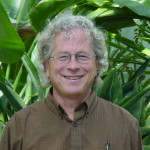
Stephen T. Jackson is an ecologist and paleoecologist, studying the effects of environmental change on North American forests, woodlands, and wetlands. He is currently Director of the U.S. Department of the Interior Southwest Climate Science Center, a partnership between the U.S. Geological Survey and a multi-university consortium led by the University of Arizona. In this position, he is working to foster effective engagement between climate scientists and resource-management decision-makers. He is also Professor of Geosciences and Adjunct Professor of Natural Resources and Environment at the University of Arizona, Professor Emeritus of Botany and Ecology at the University of Wyoming, and Adjunct Professor of Life Sciences at Imperial College London. In the past, he has held faculty positions at Indiana University, Idaho State University, Northern Arizona University, and the University of Wyoming, where he was founding Director of the Program in Ecology (2004-2011). Jackson is a 2006 Fellow of the Aldo Leopold Leadership Program, a 2009 Fellow of the American Association for the Advancement of Science, and in 2012 was a Visiting Research Fellow at Merton College, University of Oxford and a Scholar in Residence at the Ucross Foundation. In 2014 he was named a Fellow of the Ecological Society of America.

Ida Kubiszewski is a Senior Lecturer at the Crawford School of Public Policy at Australian National University. Prior to this she was an Assistant Research Professor and Fellow at the Institute for Sustainable Solutions, at Portland State University. She is also a UN negotiator on climate change, following adaptation and loss & damage, for the country of the Dominican Republic at the Conference of Parties (COP) in Warsaw, Poland in November 2013 and in Lima, Peru in December 2014. Kubiszewski is the founding managing editor and current co-editor-in-chief of a magazine/journal hybrid called Solutions, as well as the Managing Editor of Reviews in Ecological Economics, published annually by Springer, providing in-depth reviews of the most timely and important issues in the field of Ecological Economics.Read more here.
 Lisa J. Lucero is a professor of anthropology at the University of Illinois Urbana-Champaign and an American Association for the Advancement of Science Fellow. As an archaeologist, her interests focus on ritual and power, water management, the impact of climate change on society, sustainability in tropical regions, and the ancestral Maya. She received her PhD from UCLA in 1994 and has been conducting archaeology in Belize for 35 years, authoring seven books and an array of articles and book chapters. She uses insights from past and present Maya knowledge and practices to promote sustainable strategies to address global climate change, detailed in a forthcoming book Maya Wisdom and the Survival of Our Planet (Oxford University Press, early 2025).
 Tom McGovern is Professor at the Department of Archaeology, Hunter College. Tom is also coordinator and one of the founders of the North Atlantic Biocultural Organization (NABO). He is also invvolved in a global network of interdisciplinary teams of researchers exploring long term human ecodynamics, Global Human Ecodynamics Alliance (GHEA) that is also connected to IHOPE. McGovern is active in the GHEA alliance and IHOPE through the Circumpolar Networks program. Tom is also associate director of the Human Ecodynamics Research Center at the CUNY Graduate Center and has served on multiple NSF and international panels on arctic and interdisciplinary research. He is a researcher in IHOPE Islands and the IHOPE Global Threats to Heritage.
 Raphaël Mathevet is an ecologist and geographer, director of research at the CNRS in the Centre d’Ecologie Fonctionnelle et Evolutive in Montpellier (France). Mixing historical and political ecology approaches, he works on the conservation of biodiversity, protected areas and conservation planning tools, adaptive co-management and, evaluation of public policies, especially in the context of Mediterranean wetlands and natural resources management. His most recent work focuses on the concept of ‘ecological solidarity’, the resilience of social and ecological systems, and the human dimensions of conservation and human/wildlife conflicts. Raphaël is a member of several scientific committees at local, regional and national levels. He is member of the steering committee of the UNESCO MAB France Committee and a member of the international advisory committee for Biosphere Reserves of the UNESCO Man and Biosphere program.
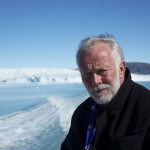
Sander van der Leeuw. After holding academic positions in Amsterdam, Cambridge (UK) and Paris (Panthéon-Sorbonne I), Sander van der Leeuw is the emeritus dean of Arizona State University’s School of Sustainability. He was trained in archaeology and medieval history at the University of Amsterdam. An expert in the role of invention, sustainability, and innovation in complex adaptive systems, he coordinated interdisciplinary research projects on long-term environmental issues and human-nature interactions for the European Union. A native of Holland, he is a corresponding member of the Royal Dutch Academy of Arts and Sciences and an external Professor at the Santa Fe Institute. In 2012, UNEP named him the “Champion of the Earth for Science and Innovation” for his work on human-environmental relations. Read more here.
 Libby Robin is an environmental historian and historian of science, Professor Fenner School of Environment and Society ANU. Libbys research explores the unfolding history of the Anthropocene, including the history of IHOPE (Robin and Steffen 2007). Since 2011 she has been affiliated with KTH Environmental Humanities Laboratory, Stockholm resulting in the books The Environment: A History of the Idea and The Environment: A History of the idea (in both cases edited by Paul Warde, Libby Robin and Sverker Sörlin, Johns Hopkins University Press) . Libby is President of the International Consortium of Environmental History Organizations (ICEHO) and co-Convenor of the Australian Environmental Humanities Hub.
 Vernon L. Scarborough is Distinguished University Research Professor and Charles Phelps Taft Professor in the Department of Anthropology at the University of Cincinnati (see personal webpage). His work focused on past and present water systems spanning across the U.S. Southwest, Belize, Guatemala, Indonesia, Greece, Pakistan, and Sudan. Examining past engineered landscapes, Vernon addresses both ancient and present societal issues from a comparative ecological and transdisciplinary perspective, as demonstrated in his 2003 book The flow of Power (SAR press). Vernon is a key research in the IHOPE theme Water for Life and the editor of Water and Humanity: A Historical Overview (published by UNESCO), he is a Senior Editor for WIREs Water Journal and a Series Editor for New Directions in Sustainability and Society.
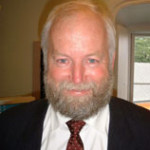
Paul Sinclair was a founding member and enduring supporter of IHOPE. He was Professor emeritus of the chair in African and Comparative Archaeology, Department of Archaeology and Ancient History, Uppsala University. Paul was particularly interested in evidence based spatial analysis of material culture distributions in regional and landscape perspectives. He was research leader of the research cooperation prgrammes Urban Origins in Eastern Africa and Human Responces and Contributions to Environmental Change (HRAC). In his career Paul supervised more than 40 PhD students. Paul’s interest in socio-environmental interactions in farming community and urban contexts in the central African and Indian Ocean region, was summarised in his edited books African Archaeology, Foods, Metals and Towns (Routledge, edited by Bassey Andah, Alex Okpoko, Thurstan Shaw ) and Urban Mind (published by Uppsala University). The Resilience of Heritage: Cultivating a Future of the Past. Essays in Honour of Professor Paul J.J. Sinclair (Uppsala University) was published in 2018.
Will Steffen was an Earth System scientist with a long-standing interest in the role of humans and our activities in the functioning of the System – past, present and future. He was adjunct professor at both the Australian National University and the University of Canberra, as well as a senior fellow at the Stockholm Resilience Centre. From 1998 to 2004, Steffen was executive director of the International Geosphere-Biosphere Programme (IGBP). He was also a senior associate with the University of Cambridge Institute for Sustainability Leadership, UK, and a Councillor with the Climate Council of Australia.